

Selection of bib is crucial.
Babies who are eating well may use baby bibs. They can not only help newborns learn to feed on their own but also lessen the cleaning load on moms and successfully shield the baby’s clothing from food stains. Baby and parent selection of the appropriate baby bibs is crucial.
Relevance of Baby Bibs
Daily living depends heavily on baby bibs for the following reasons:
Protect clothing: Bibs lessen the amount of times your baby has to be changed and washed as they stop food, milk, and saliva from staining their clothing.
Maintain hygiene: A further layer of clean protection offered by bibs helps to guarantee that your baby remains as clean as possible when eating or dribbling. Keep tidy
Advance education
Promote autonomous feeding: Babies may attempt to eat on their own in bibs’ safe and unrestricted environment.
Bibs may assist a baby concentrate more on developing their hand-eye coordination by lowering their anxiety brought on by their fear of staining clothing.
Assure a pleasant experience
Superior bibs are often constructed of soft materials that are easy to wear and won’t bother the baby’s skin.
Adjust to various body shapes: Babies of all ages and body types may wear the adjustable bib with ease.
Conveniency
Easy to clean: For time-pressed parents, many bib styles are fast to wash and dry.
Bibs are often lightweight and foldable, which makes them simple for parents to tote while heading out.
Securities
No little components: Babies are less likely to inadvertently swallow well-designed bibs because they lack easily falling-off embellishments and small elements.
Materials that are non-toxic Select non-toxic and chemically additive-free bib materials to guarantee your baby’s safety.
Fun and personalization
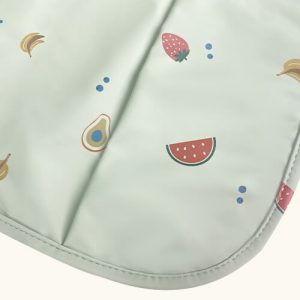
Bibs are available in a range of colors, patterns, and themes; choose the ones that best suit your baby’s hobbies and tastes to make feeding more enjoyable.
Encourage parent-child contact by having conversations about the designs on the bibs with your kid.
Prevent stains: By keeping food and liquids from splattering over baby’s clothing, bibs may lessen the need and time of cleaning.
Reducing the chance of a bacterial illness, bibs may help a baby learn to feed on their own by keeping their hands and clothing clean.
Bibliography
Easy of usage and usefulness of the bib are determined by its design. You might consider the following design elements when selecting a bib:
First, size and coverage
The age of your infant and the intended usage will determine the appropriate size. A feeding bib should be bigger to provide more coverage and stop food from splattering over clothes; a sloppy bib should be tiny enough to use every day.
Collar style
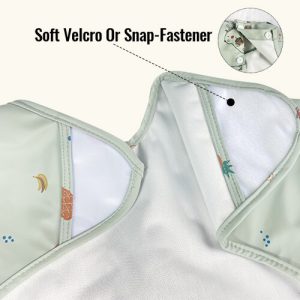
For the bib to suit your baby’s neck comfortably but not too tightly, the collar should be adjustable. Buttons, Velcro and snaps are common collar styles. Though Velcro is simple to apply and snaps are robust and long-lasting, take care not to let Velcro abrade your baby’s skin.
Three-tiered layout
The feeding bib’s trough is its best feature; it can efficiently capture spilled food and drinks to keep the infant and the surroundings hygienic. Most of the time, the trough is constructed of easily cleaned waterproof material.
Design with full coverage
Babies who are starting to walk and self-feed may safeguard their whole upper body with full coverage bibs. Usually including sleeves, these bibs provide more complete protection.
Choosing bib materials
Quality and utility of bibs are mostly determined by their material. Materials used often for baby bibs include:
Cotton, to start
Everyday use cotton bibs are a great option since they are soft, comfy, and very absorbent. Drool bibs and light feedings are appropriate for cotton material since it breathes and won’t bother the baby’s sensitive skin.
Terry cloth, second
Similar to the substance of a towel, terry fabric bibs are very absorbent and can efficiently hold milk and spit. For infants that drool a lot, they work well as a shield during regular feedings.
Silicone
Good waterproofness and durability characterize silicone bibs, which are often made with a feeding trough that efficiently collects spilled food and drinks. Perfect for feeding, silicone bibs are also very simple to clean.
Polyester
Usually waterproof and simple to clean, polyester bibs have a covering. They work well for activities like feeding and leaving that call for waterproof functionality.
Bamboo fiber
Suitable for infants with delicate skin, bamboo fiber bibs are soft and comfy, naturally antibacterial. Parents who value natural materials will find them to be the best option because of their excellent water absorption and environmental protection qualities.
Get apply recommendations
1. Make occasional purchases
Parents should make ample preparations since babies could need to change bibs multiple times a day. Purchasing many pairs of bibs will guarantee that the infant always has clean bibs to use and lessen the amount of times they should be washed.
2.Choose many kinds.
Get ready many bibs for various situations and requirements, like large-sized bibs for feeding, waterproof bibs for going out, and saliva bibs for everyday usage.
3.Change out the bibs.
Rotating bibs helps prevent undue wear and tear from using a single bib too often and may prolong the life of each one.
4.Frequently wash
Maintaining cleanliness of the bibs is very crucial. Regular machine washing is advised for fabric bibs; water or a moist towel may be used to clean silicone and waterproof bibs.
Synopsis
Choosing the ideal baby bibs means giving materials, design, utility, and safety careful thought. Bibs are more than just a plain piece of cotton; they are crucial to infant development and learning. Babies may develop in a healthier, safer, and more pleasurable environment when bibs are used and chosen correctly.